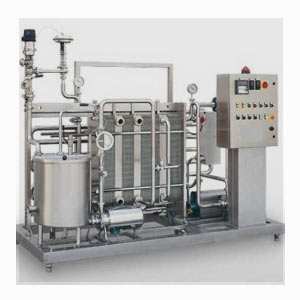
Milk Pasteurization Plant Manufacturers in Nashik - Wils Process Engineering
Wils Process Engineering is leading Milk Pasteurization Plant Manufacturers, Suppliers, Dealers, Traders and Exporters in Nashik. We offer advanced Milk Pasteurization Plant solutions designed to meet the growing needs of modern dairy industries.
We provide efficient, hygienic, and reliable dairy processing systems that help maintain milk quality, safety, and freshness. Our solutions include Automatic milk pasteurization plant for dairy applications designed to deliver consistent and safe milk processing for modern dairy operations. Our plants are developed with advanced technology, robust construction, and user-friendly operations to deliver consistent performance.
We offer customized solutions for different production requirements, including small, medium, and large-scale dairy businesses with excellent efficiency and long-term operational value. We also manufacture 500 LPH Milk Processing Plant solutions for dairy units requiring reliable and efficient medium-capacity processing.
What Is a Milk Pasteurizer and Why Is It Essential for Safe Dairy Processing?
A Milk Pasteurizer is an essential dairy processing system used to eliminate harmful microorganisms from raw milk while preserving its nutritional value and natural taste. This equipment supports safe milk production by maintaining controlled heating and cooling conditions. It is widely used in dairy industries as a vital part of dairy processing equipment for producing safe and high-quality milk products. A commercial milk pasteurizer plays an important role in ensuring safe and efficient dairy production for commercial processing facilities.
Working Principle of Milk Pasteurization Plant
As Milk Pasteurization Plant Manufacturers in Nashik, we follow an advanced pasteurization process that ensures safe, hygienic, and energy-efficient milk processing:
Milk Reception & Filtration: Raw milk enters the balance tank and passes through filters to remove impurities and maintain smooth processing flow.
Pre-Heating & Heat Recovery: The milk passes through a Plate Heat Exchanger (PHE) where heat recovery improves energy efficiency by transferring heat from pasteurized milk.
Standardization & Homogenization: Milk fat content is adjusted using a cream separator, and homogenization improves texture by preventing cream separation.
Pasteurization Heating: Milk is heated to around 72°C–74°C through the heating section to destroy harmful bacteria while retaining nutritional value.
Holding Process: The heated milk remains in holding tubes for the required time to ensure complete microbial elimination through HTST pasteurization. This stage is an essential part of HTST Milk Processing for achieving consistent microbial safety.
Safety Temperature Control: Automated sensors and flow diversion systems maintain accurate temperature conditions and redirect under-processed milk for reprocessing.
Rapid Cooling & Storage: Pasteurized milk is quickly cooled to 4°C or below and transferred to hygienic storage or packaging systems for safe distribution.
Types of Milk Pasteurization Plant
As Milk Pasteurization Plant Suppliers in Nashik, we offer multiple pasteurization systems to suit diverse dairy production capacities and processing needs:
Batch (Vat) Pasteurization Plant: Using the Low-Temperature Long-Time (LTLT) method, this system heats milk at 63°C for around 30 minutes to achieve effective pasteurization. It is suitable for small dairies and low-volume production units due to its simple operation and lower investment requirements.
High-Temperature Short-Time (HTST) Pasteurization Plant: Designed for continuous milk processing, this system heats milk at approximately 72°C for 15 seconds using a Plate Heat Exchanger (PHE). It offers high efficiency, energy savings, and is preferred for commercial dairy production. Our 500 LPH Milk Pasteurization Plant is available with this advanced processing technology for medium-scale dairy operations.
Ultra-Pasteurization (UP) Plant: Operating at temperatures of 138°C or higher for a few seconds, this process provides extended shelf life with effective microbial reduction. It is commonly used for specialty dairy products requiring longer refrigerated storage.
Ultra-High Temperature (UHT) Plant: Using advanced aseptic processing technology, this system heats milk between 135°C and 150°C for a short duration to create shelf-stable milk. It is ideal for large dairy operations requiring long storage life without refrigeration.
Technical Specifications of Milk Pasteurization Plant
As Milk Pasteurization Plant Dealers in Nashik, we provide technically advanced plants built for reliable, efficient, and hygienic dairy processing. Different models are available based on required milk pasteurization plant capacity to suit diverse production requirements:
Parameter
100 LTR
200 LTR
350 LTR
600 LTR
1000 LTR
Fabrication Material
SS-304
SS-304
SS-304
SS-304
SS-304
Number of Heaters
3
3
3
3
3
Heater Capacity
2 KW
3 KW
4 KW
6 KW
12 KW
Electric Motor Power
1/2 HP
1/2 HP
1 HP
2 HP
3 HP
Motor Make
ABB/CG
ABB/CG
ABB/CG
ABB/CG
ABB/CG
Key Technical Highlights
SS-304 Construction: Built with food-grade stainless steel for hygienic, durable, and corrosion-resistant milk processing. The system can also be integrated with stainless steel storage tanks for safe and hygienic milk handling.
Reliable Motor Performance: ABB/CG motors provide smooth operation, high efficiency, and long service life.
Flexible Capacity Range: Available in various models to suit different dairy production requirements.
Energy-Efficient Design: Optimized systems reduce power consumption and operating costs.
Key Features of Milk Pasteurization Plant
As Milk Pasteurization Plant Traders in Nashik, we design every plant with advanced features for precise, hygienic, and user-friendly processing:
Food-Grade Stainless Steel Construction: Manufactured using food-grade stainless steel equipment to ensure hygienic processing, durability, and long-lasting performance.
Advanced Temperature Control: Provides precise heating and cooling control to maintain effective milk pasteurization process standards.
Energy-Efficient Heat Recovery: Equipped with a Plate Heat Exchanger (PHE) system that improves energy efficiency and reduces operational costs.
Automatic Processing System: Integrated with dairy automation and automated controls for accurate operation and consistent milk quality. The automatic milk pasteurization plant design improves operational efficiency while minimizing manual intervention.
Easy Cleaning & Maintenance: Designed with a CIP cleaning system to support quick cleaning and maintain high hygiene standards.
Benefits of Milk Pasteurization Plant
As Milk Pasteurization Plant Exporters in Nashik, we deliver solutions that enhance milk quality, operational efficiency, and overall productivity:
Improves Milk Safety: Effectively eliminates harmful microorganisms while preserving the nutritional quality and freshness of milk.
Extends Product Shelf Life: Helps maintain milk quality for longer periods through controlled heating and cooling processes.
Enhances Production Efficiency: Supports continuous processing with reliable performance for commercial dairy operations.
Reduces Operating Costs: Energy-saving technology and automated functions help minimize labour and power consumption.
Ensures Consistent Quality: Maintains uniform processing conditions for better taste, texture, and product reliability. It also supports effective quality control in dairy processing through precise monitoring and automated process control.
Applications of Milk Pasteurization Plant
As Milk Pasteurization Plant Suppliers in Nashik, we provide versatile systems suitable for a wide range of dairy processing applications:
Dairy Processing Industries: Widely used in dairy units for safe and efficient large-scale milk processing applications.
Milk Production Plants: Helps process fresh milk hygienically before storage, packaging, and distribution. The processed milk can be safely stored in milk storage tanks before packaging and dispatch.
Milk Chilling and Pasteurization Plants: Suitable for integrated systems combining milk cooling and pasteurization operations.
Commercial Dairy Farms: Used for producing safe and fresh milk products with improved quality control.
Complete Dairy Processing Plants: Supports various dairy operations as an essential part of a complete milk processing plant.
Small and Medium Dairy Units: Ideal for businesses requiring a small scale milk pasteurization plant with efficient performance.
Industrial Dairy Applications: Used in an industrial milk pasteurization plant setup for continuous and high-capacity production.
Why Choose Us?
Innovative & Reliable Solutions: We manufacture advanced milk pasteurization plants using food-grade materials and quality components for hygienic, efficient, and long-lasting performance.
Tailor-Made Dairy Systems: Our customized pasteurization plants are designed to meet the capacity and operational needs of small, medium, and large dairy processing units.
End-to-End Customer Support: From system design and manufacturing to milk pasteurization plant installation and after-sales service, we provide complete support for smooth and reliable dairy operations.
Wils Process Engineering is trusted Milk Pasteurization Plant Manufacturers, Suppliers, Dealers, Traders and Exporters in Nashik. We provide high-quality milk pasteurization solutions that help dairy businesses achieve safe, efficient, and hygienic milk processing. Our advanced systems are designed with modern technology, reliable components, and customer-focused features to support different production needs. We ensure superior performance, easy operation, and long-term value for every dairy processing requirement with hygienic dairy machinery. Get in touch with us for more details.
FAQ’s
Pasteurization improves milk safety by eliminating harmful microorganisms and helps extend shelf life without affecting the natural quality of the milk.
The most common HTST process heats milk to around 72°C–74°C for about 15 seconds, followed by rapid cooling to preserve freshness and safety.
Automatic systems provide accurate temperature control, consistent milk quality, reduced manual effort, improved productivity, and lower operating costs.